Welcome back, brand enthusiasts!
Today, I am going to talk about future growth for one of my favourite coffee brands - Starbucks. First, let us take a closer look at its existing strategies that have been effectively put in place till date.
(1) Extension Strategies
Extension strategies can be classified into 4 types; (i) line extension, (ii) brand extension, (iii) concept extension and (iv) co-branding.
(i) Line-extension: Monthly New Drinks

Almost every month, Starbucks launches at least two seasonal drinks with flavours that sound really tasty and exciting to attract regular customers for repeated visits. It is effectively also a vertical line-extension to increase the average spending as the seasonal beverages are generally priced higher than its average selection. For example, their normal coffee costs between S$6-8 while their festive/seasonal flavours cost between S$8-10.
(ii) Product Brand-extension: Tea
For the longest time, Starbucks has been focusing on the coffee drinkers' market but they have probably realised there is a huge market of deprived tea drinkers that they came up with the Teavana™ with their Tea-logy that boasts a number of creative tea-based drinks to stay competitive with other tea brands as there has been a milk tea/flavoured tea craze in Asia. This has helped the brand to stay relevant to current trend and to adapt to the shift in consumer pattern from coffee to tea as well as to gain the market share of tea drinkers and even the loyalty of coffee drinkers who occasionally go for tea.

(image credit: Starbucks Singapore)
(iii) Concept extension: Retail Lifestyle Goods
Apart from the main coffee beverages and food, Starbucks has ventured into a series of tasteful goods from mugs to tumblers and pouches. By having this new retail product line through concept extension tapping on the brand, Starbucks is able to position itself as a lifestyle brand not just a coffee/cafe brand.


(image credit: Starbucks Singapore)
(iv) Co-branding: Merchandise & Corporate Brand
There are two layers of co-branding that Starbucks has adopted; the top layer is co-branding using its corporate brand Starbucks and the other is the co-branding with its merchandise from its concept extension.
- Corporate Brand Co-branding
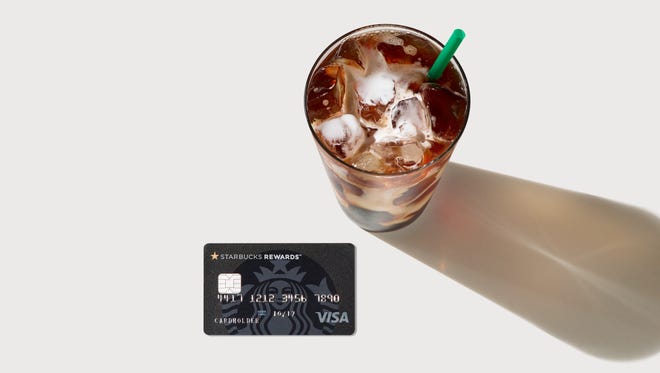
With Starbucks' current branding, it is capable of attracting other globalised brands to do partnerships for co-branding. In 2018, Starbucks partnered with Visa to launch a co-branded Starbucks Rewards Visa Cards that entitle cardholders to exclusive perks under the Starbucks loyalty program. It is like a free advertising for Starbucks to have their name and logo emblazoned on the credit card and "every time you whip it out of your purse or your wallet, it reminds you of Starbucks".
- Merchandise Co-branding
The merchandise product line has expanded to be another important part of Starbucks brand in strengthening itself as a 'lifestyle brand' in the minds of consumers. In 2018, Starbucks US collaborated with luxury eyewear brand Retro Superfuture to mark the opening of Starbucks Roastery Reserve in Milan by launching the Retrosuperfuture Reserve Roastery limited edition shades. By collaborating with well-known brands and famous individuals, Starbucks is able to leverage on their popularity to catch their fans and supporters converting some of them to Starbucks followers.

(2) Multi-brand Strategy: Diversifying the Coffee Drinkers' Market
In recent years, Starbucks has gradually expanded the number of Starbucks Roastery Reserve chains that are offering a higher quality selection apart from some of the regular choices. This is to target a different segment of the coffee drinkers' market; the higher notch consumers who prefer coffee from freshly roasted beans.
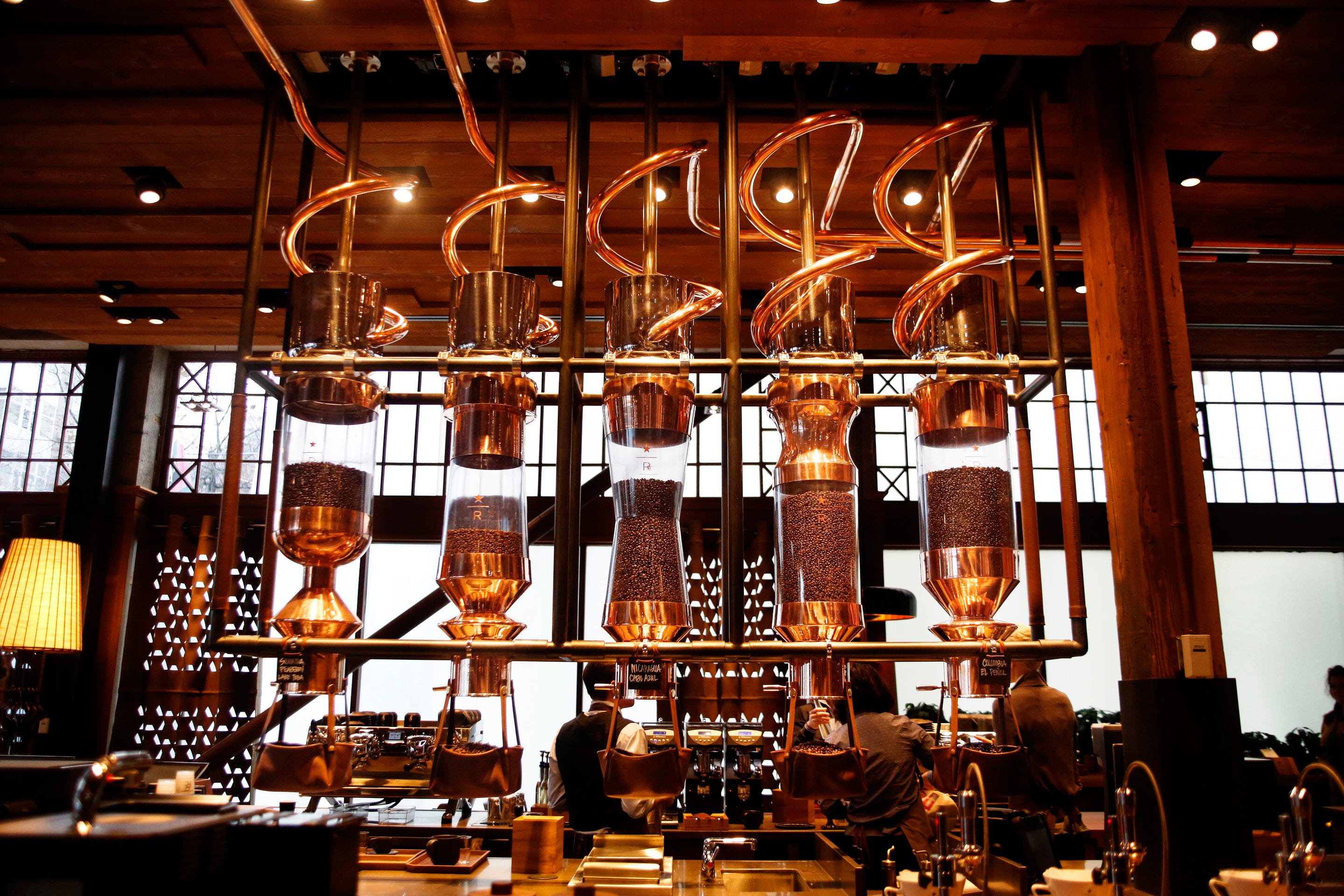
(image credit: medium.com)
(3) Future Growth Strategies
Based on Starbucks' trend of being a lifestyle brand to bring fellow members of the Starbucks community together, I propose the following growth strategies (a mixture of multi-brand, concept and brand strategies) that Starbucks can explore.
- 'Starbucks Coffee & Bar' at world-class hotels
As Starbucks is well-known for its coffee creations and tea-logy mixes, it is likely that Starbucks is able to extend into alcoholic beverages exploring mixes with tea and coffee. While most of the Starbucks stores are standalone or in shopping malls, this new concept can be an even high-end one than the Starbucks Roastery Reserve by collaborating with world-class hotels to be the master tenant for coffee lounge and bar at the lobbies.
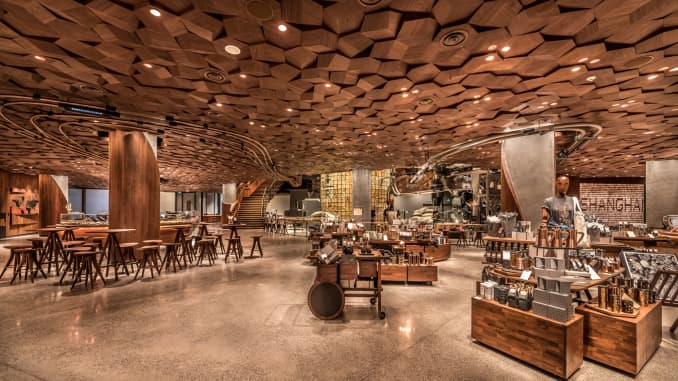
(Image credit: Starbucks Reserve Shanghai)
- 'The Starbucks Experience' stores
To live the brand, Starbucks can look into expanding more thematic experiential stores combining with the coffee drinking space. Some can be with music (eg, Spotify for its music with Audio Technica for headphones), sports gaming (eg. Razer hardware and games), mobile technology (eg, Apple) and apparel (pop-up stores featuring different apparel brands).

(image credit: proavl-asia.com)
- 'Starbucks Cowerks'
Starbucks has built the trend of office workers using the space to do work on their laptops and host casual business discussions. To facilitate a better customer experience for this group of customers, Starbucks can look into partnering with co-working concepts such as Cowerks where members can gain exclusive entry as a member to use the working space and office facilities while enjoying the Starbucks atmosphere at a fixed monthly/daily rate.
 (image credit: Cowerks facebook)
With the above strategies, Starbucks would be able to enhance the overall Starbucks experience for consumers with different interests in various market segments to live the brand. The partnerships and locations that Starbucks has chosen up till date have been successful so extending its brand growth through the above would not have much risk although an over-saturated market full with Starbucks could cause competition against one another.
https://www.usatoday.com/story/money/food/2018/02/01/starbucks-launches-co-branded-visa-credit-card/1076849001/
https://www.forbes.com/sites/nomiprins/2015/05/19/the-spotify-starbucks-partnership-is-digital-co-branding-genius/#8000f144a7ae
https://www.brandjam.it/co-branding-starbucks-milan/?lang=en
Teavana:
https://www.starbucks.com.sg/menu/beverages/TeavanaMatchaBlackTeaHibiscusTea
https://en.starbucks.com.cy/menu/beverage-list/brewed-tea
Comments
Post a Comment